
Assess, Don't Guess: Why Every Program at Holy City CrossFit Starts With a Movement Assessment
Most gyms, and most trainers early in their careers, do the same thing on day one. They put you through a workout and watch how you handle it. Mobility issues, old injuries, movement patterns that don't quite work right, all of it gets figured out on the fly, mid-workout, instead of before you ever touched a weight.
We don't do that. OnRamp clients heading into group classes and Core Coaching clients going 1-on-1 both start the exact same way: a full movement assessment before we write a single line of programming. Assess, don't guess. We're not just saying that to sound good. It's genuinely how every single person starts here.
What "Functional Movement" Actually Means
CrossFit's own methodology is built on three things: constantly varied, functional movements, performed at high intensity. Functional movements are just the ones you already use every day to live: squatting, hinging, pushing, pulling, carrying. Training turns up the volume on movement patterns your body is already built to do, so when life demands them under real load or real fatigue, you're ready.
A thruster, a deadlift, a pull-up, a farmer's carry: at the core, they're all just one of those same handful of patterns, loaded up and varied. So before we can program any of it well, we need to know how each pattern actually holds up for you specifically.
The Assessment: What We Actually Test
Our movement assessment covers seven things, and each one maps directly onto a pattern you'll see in your programming for as long as you train with us.
The squat. This is the base pattern under front squats, back squats, thrusters, wall balls, and box jumps. We're watching your depth, how your knees track, and whether your torso holds position as your center of mass drops low.
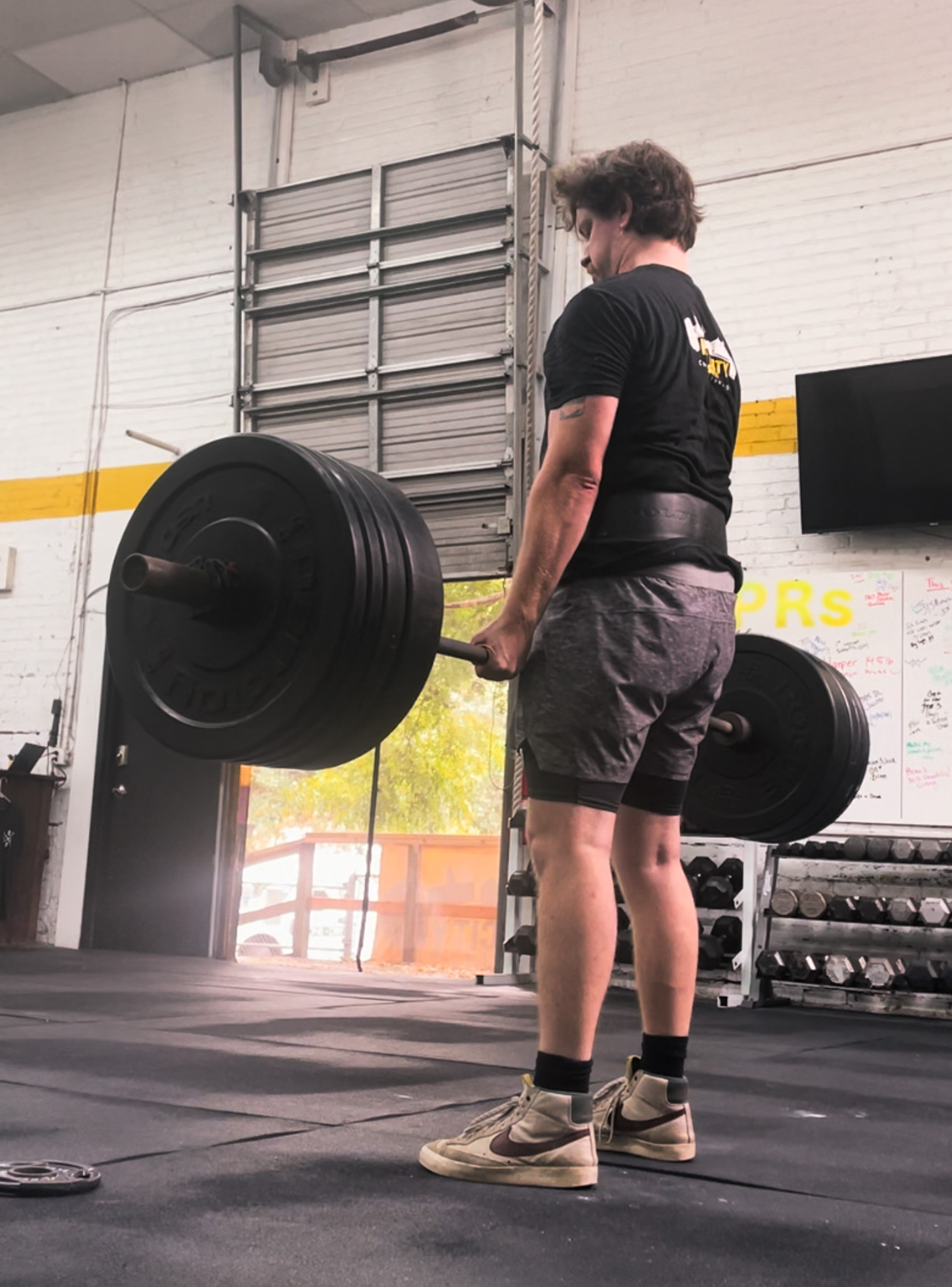
The hinge. The hip-dominant pattern behind deadlifts, kettlebell swings, and the pull phase of every Olympic lift. It's also one of the most common spots where we find limitations that quietly turn into low-back trouble once real load gets added.
The lunge / split squat. A single-leg version of the squat. It's the fastest way to catch left-right imbalances that a two-legged squat can hide completely. Step-ups, lunges, and single-leg work all come from here.
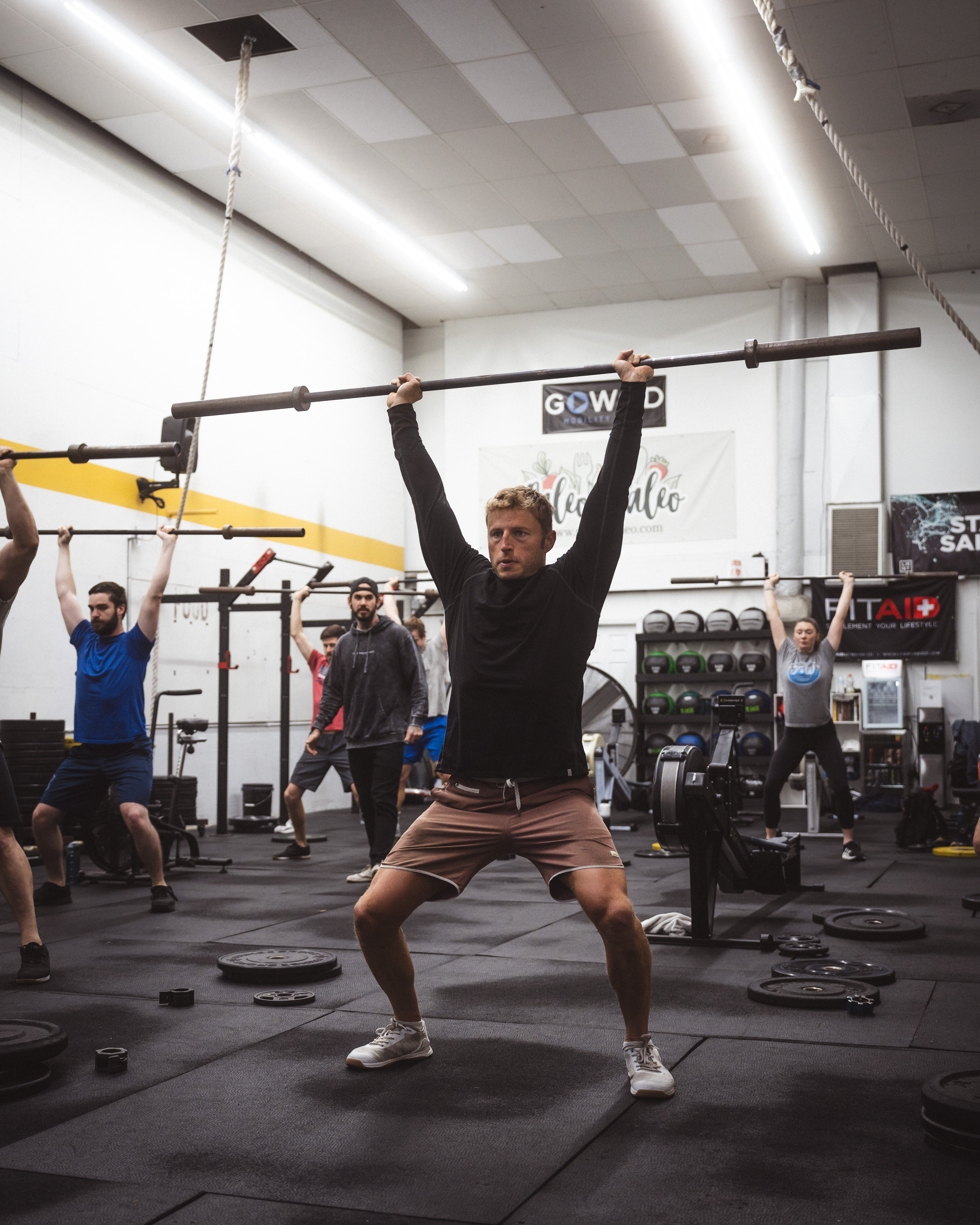
The scratch test and overhead mobility. This checks shoulder rotation and thoracic mobility, basically how much range you actually have available for overhead squats, snatches, push press, and handstand work. Those are positions most people never ask their shoulders to hold outside the gym.
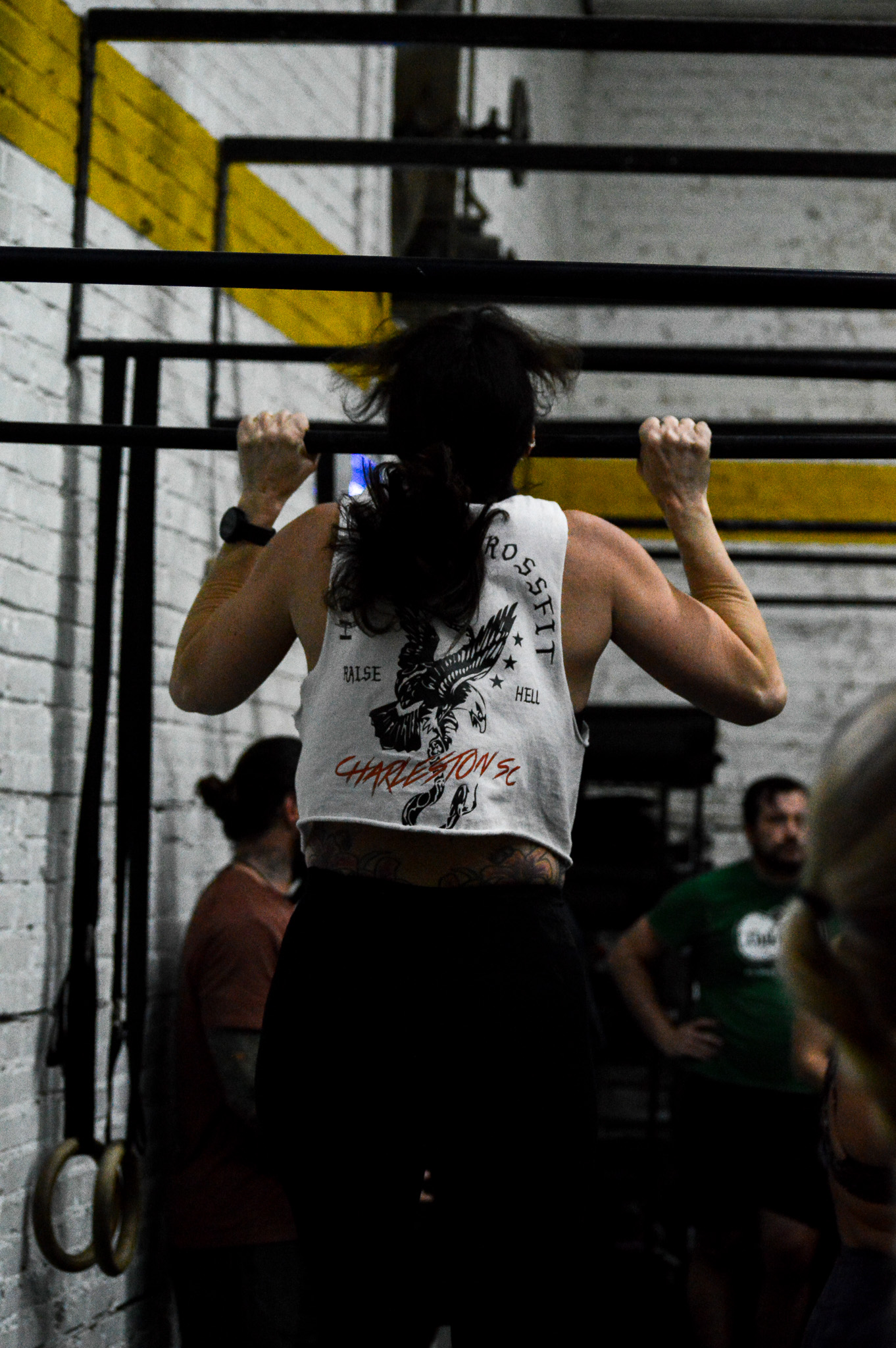
The dead hang. A simple read on shoulder and scapular stability plus grip. It's the starting point for the whole pulling progression: pull-ups, toes-to-bar, and eventually the muscle-up.
The plank. Trunk and core stability. Everything else on this list only works if the bracing underneath it holds, whether that's a squat, a hinge, or an overhead position.
A 10-minute assault bike test for calories. This one isn't about a movement pattern at all. It's a baseline conditioning number, a real, individual data point we use to build your conditioning programming instead of guessing at what intensity actually makes sense for you.
What "Available" and "Unavailable" Actually Means
This is where the assessment actually becomes useful. For each of those seven areas, we're sorting what you can currently do well (under control, through a full range, without compensating) from what you can't do yet.
"Available" doesn't mean perfect. It just means the pattern's there: your mechanics hold up, and there's a real foundation to build on. "Unavailable" isn't a diagnosis, and it's definitely not a life sentence. It just means something's currently getting in the way, whether that's mobility, stability, or motor control. Load that pattern right now, and you're loading a compensation instead of the actual movement.
This is the part most programs skip. Handed a generic plan, most people either avoid the things they're bad at indefinitely, or push into them anyway and load a bad pattern until it turns into an injury. You don't have to do either once you actually know which of the seven areas is available and which isn't.
If you've never actually had this tested, it's worth thinking about for a second. Do you really know which of your basic patterns are solid, and which ones you've just been quietly working around for years?
Mechanics Before Load, Load Before Intensity
Once we know what's available and what isn't, the plan follows a specific order, the same order CrossFit's own methodology is built on: learn the movement first, repeat it well under control, and only then add load, speed, or intensity.
Anything that showed up available, we can move toward loading and building intensity fairly quickly, since the foundation's already there. Anything that showed up unavailable doesn't get avoided. It gets a progression instead: simpler variations, mobility work, and stability drills that rebuild the pattern piece by piece until it's actually available. Then, and only then, load gets added on top.
Skip that order and load a pattern before it's earned the right to be loaded, and you get exactly what we've talked about before on this blog: mechanics that break down under fatigue right when intensity gets added. The assessment is what keeps that from happening without anyone meaning for it to.
Why Every Client Starts Here, No Exceptions
It doesn't matter if you're brand new to fitness coming through OnRamp, or an experienced athlete going through Core Coaching's 1-on-1 programming. The assessment doesn't assume anything about your background. A former athlete can have real gaps in a pattern they haven't trained in years, and a total beginner can have more available than they'd guess. The only way to actually know is to test it, not assume it based on someone's fitness history or how confident they sound walking through the door.
That's really the idea behind assess, don't guess. Your program gets built from what's actually true about your movement today, not a generic template, and not a guess, educated or otherwise.