Related

What Actually Changes When You Start Training Consistently
Almost nobody who's nervous about starting at a gym is actually worried about the exercise part. Everyone knows how to sweat. What's holding most people back has almost nothing to do with fitness and almost everything to do with being seen, being judged, or being the one person in the room who doesn't know what they're doing.
That's worth saying out loud, because it's rarely said out loud. So let's actually walk through it: why people put this off, what changes once they stop putting it off, how that change follows them home, and what tends to surprise people once they're a few weeks in.
Why People Hesitate to Join a Gym or Work With a Coach
The excuses people give are usually about time or money. The real hesitation is usually smaller and more personal than that: a fear of being the least fit person in the room, of not knowing the terminology, of getting a movement wrong in front of strangers, or of hiring a coach and having them see exactly how out of shape or how stuck someone's gotten.
None of that is irrational. It's a completely normal response to walking into an unfamiliar room where everyone else looks like they know what they're doing. The problem is that feeling doesn't go away on its own, and waiting for it to go away before showing up usually just means waiting indefinitely.
CrossFit's own materials on this are refreshingly direct about it: your first class isn't a test, there's no baseline to hit, and telling the coach it's your first time isn't unusual, it's expected. First-timers aren't the exception in a gym. They're the norm on a rotating basis, every single week.
Here's a question worth sitting with if you've been putting this off: is it actually the workout you're avoiding, or is it the fifteen minutes of walking through the door not knowing anyone? Those are two very different problems, and only one of them gets solved by waiting.
What Actually Changes Once You Start Training Consistently
The physical changes are real, but they're not usually the first thing people notice. What shows up first is smaller and stranger: showing up on a Tuesday stops requiring a pep talk. The workout stops being a decision you make every morning and starts being just a thing you do, the same way brushing your teeth doesn't require motivation.
There's real research behind why that shift happens, and it has less to do with willpower than most people assume. A well-known long-term study out of Massachusetts tracked health behaviors across a dense social network for more than three decades and found that habits, everything from weight gain to smoking to quitting smoking, spread through close social ties almost like a contagion. People unconsciously recalibrate what "normal" looks like based on who's around them. Change the room you spend time in, and your sense of normal changes with it.
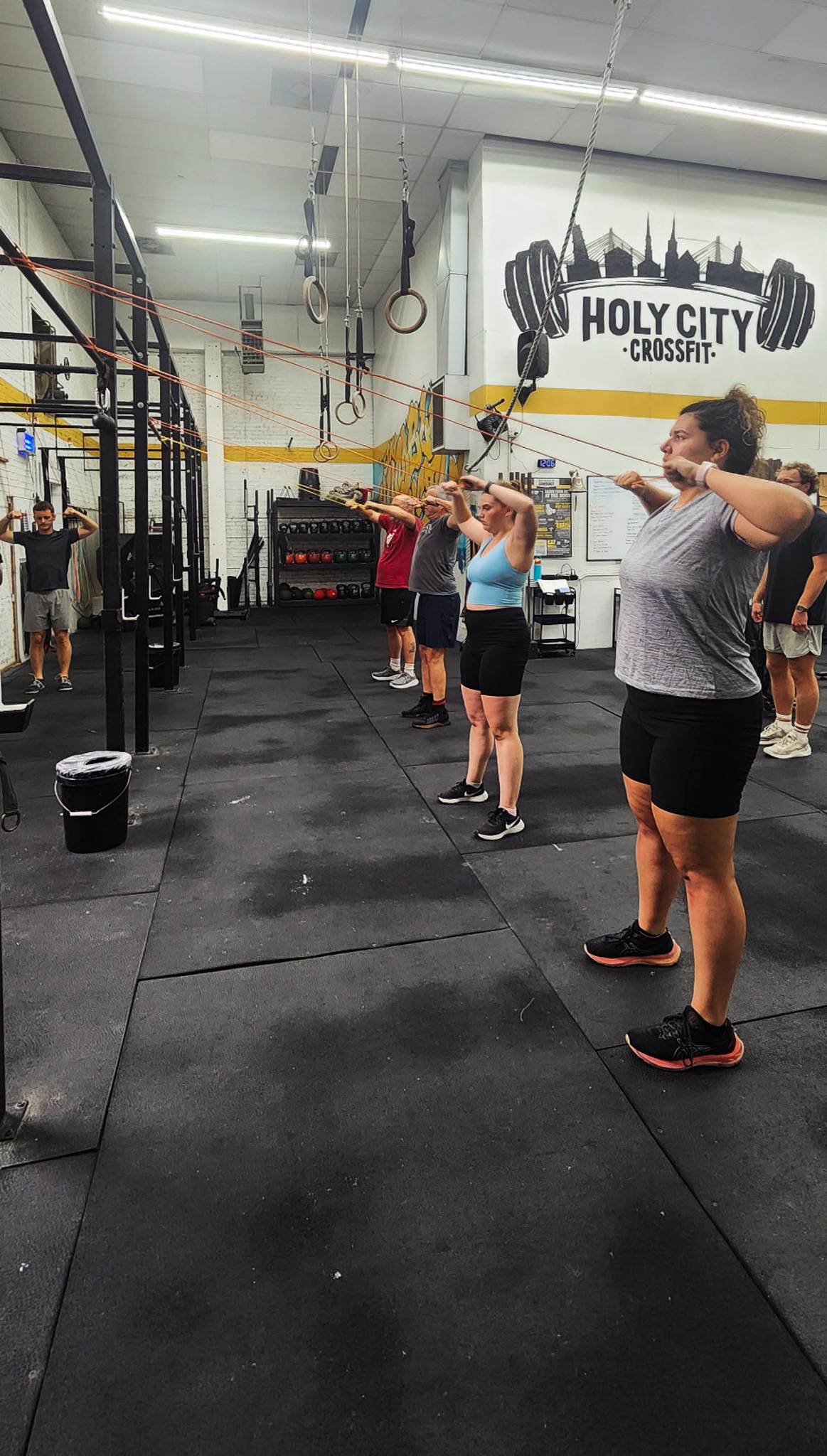
That's a big part of what's actually happening in a group class, whether anyone's naming it or not. You're not just getting coached through a workout. You're absorbing a new definition of what a normal Tuesday looks like, one where showing up before work and talking about protein and sleep the way other people talk about the weather is just how things are done.
How a Positive Gym Experience Follows You Home
The identity shift is the part that actually sticks. Once training becomes something you do rather than something you're trying to talk yourself into, it stops staying contained to the hour you spend in the gym.
People who've been at this a while consistently describe the same handful of things: picking up their kids without thinking about it, having more patience by the end of a long workday instead of less, walking into a new situation with a baseline of confidence they didn't used to carry. None of that shows up on a scale. All of it shows up in daily life.
Part of that comes from a straightforward physiological fact: better sleep, more consistent energy, and lower baseline stress all improve nearly everything else you're trying to manage, work, relationships, patience with people you love. But part of it is also the identity piece. Once "I train" becomes a fact about who you are instead of a goal you're chasing, it changes how you carry yourself in rooms that have nothing to do with a barbell.
What Actually Surprises People
Two things tend to catch people off guard, and they pull in opposite directions.
The first: the early weeks are genuinely uncomfortable, and that's not a sign anything's wrong. Movements feel foreign, the pace doesn't match what you pictured, and you'll probably leave your first few sessions still processing what just happened. That discomfort isn't a flaw in the process. It's what the process feels like before your body has built the patterns to make it feel normal. Most people notice a real shift by the third or fourth week, sometimes sooner.
The second, and this is the one that actually surprises more people: how little of the hard part is technical. Nobody expects to be told exactly what to do before the clock starts, every single time, with zero assumed experience. Nobody expects the person next to them to be doing a completely different version of the same workout and for that to be normal instead of awkward. The mental picture most people carry into a gym for the first time, some intimidating test they need to be ready for, almost never matches what actually happens once a coach is running the room.
If you've been picturing your first session as something you need to prepare for, that's probably worth reconsidering. The version in your head is usually harder than the version that actually happens.
The Bottom Line
Consistency changes more than a physique. It changes what a normal week looks like, what your default energy is, and eventually, how you think of yourself. The hardest part was never the workout. It's the fifteen minutes before it, the part where you have to decide to walk in not knowing exactly what to expect.
That's exactly the part a coach exists to make easier. Not by removing the discomfort of starting something new, but by making sure you're not doing it without a plan or without someone in your corner who's walked plenty of people through the exact same fifteen minutes.