Related

Why "Go Hard" Isn't a Training Plan — Understanding Your Threshold
There's a line in CrossFit's founding methodology that's been repeated so often it's almost background noise at this point: the needs of Olympic athletes and our grandparents differ by degree, not kind.
Most people hear that and nod along without really sitting with what it means. It means the same principles that build a Games athlete are the same principles that get a 55-year-old back into their jeans. Not similar principles. Not scaled-down versions. The *same* principles, dosed differently.
The mechanism that makes that scaling actually work — the thing that decides how much load, how much speed, how much volume is right for the person in front of you — is what we call a training threshold. It's one of the most useful concepts in fitness, and almost nobody outside a coaching staff ever gets taught what it actually means.
What Is a Training Threshold?
Your training threshold is the exact point where your mechanics — your form, your positioning, your control over the movement — start to break down under fatigue or load.
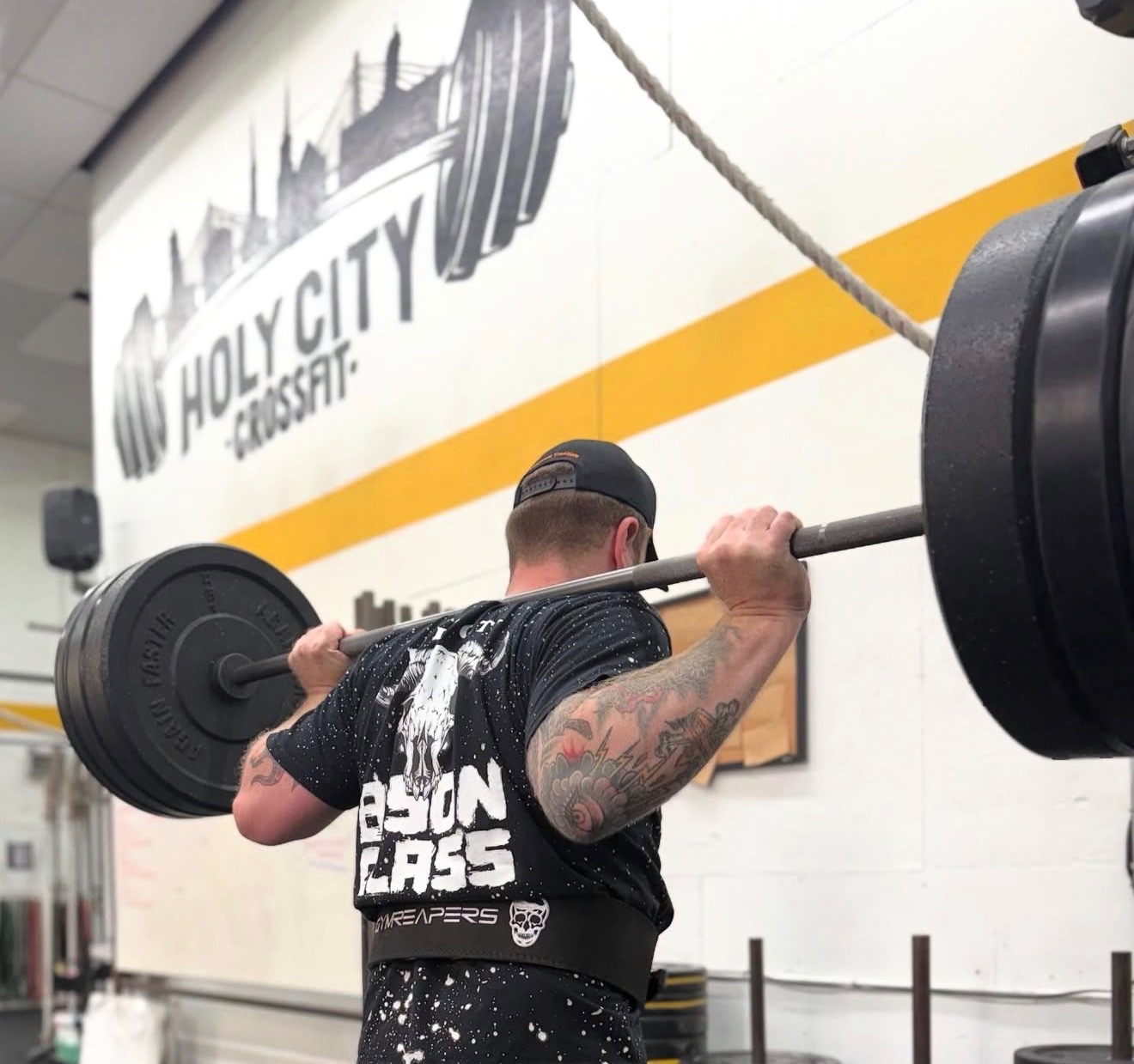
Everyone has one. It's different for every person, every movement, and every day depending on sleep, stress, and how recovered you are. That's the "degree" part of "differ by degree, not kind." An Olympic athlete's threshold on a back squat might be 500+ pounds for a handful of reps with picture-perfect positioning the entire time. A beginner's threshold on the same movement might be a PVC pipe, and their form might start to slip after the fifth rep. Different numbers. Identical concept.
Training below your threshold builds the pattern. Training right at your threshold, under control, is where real adaptation happens. Training past it — where your mechanics have already broken down and you keep going anyway — is where injuries and plateaus both live.
This is why "just go hard" has never been a real training philosophy, no matter how many fitness influencers repeat it. Effort without a sense of where your threshold is isn't intensity. It's just risk.
Why Threshold Matters More Than Effort
Here's the part that surprises people: pushing past your threshold doesn't actually make you fitter, faster. It just makes the same session more dangerous.
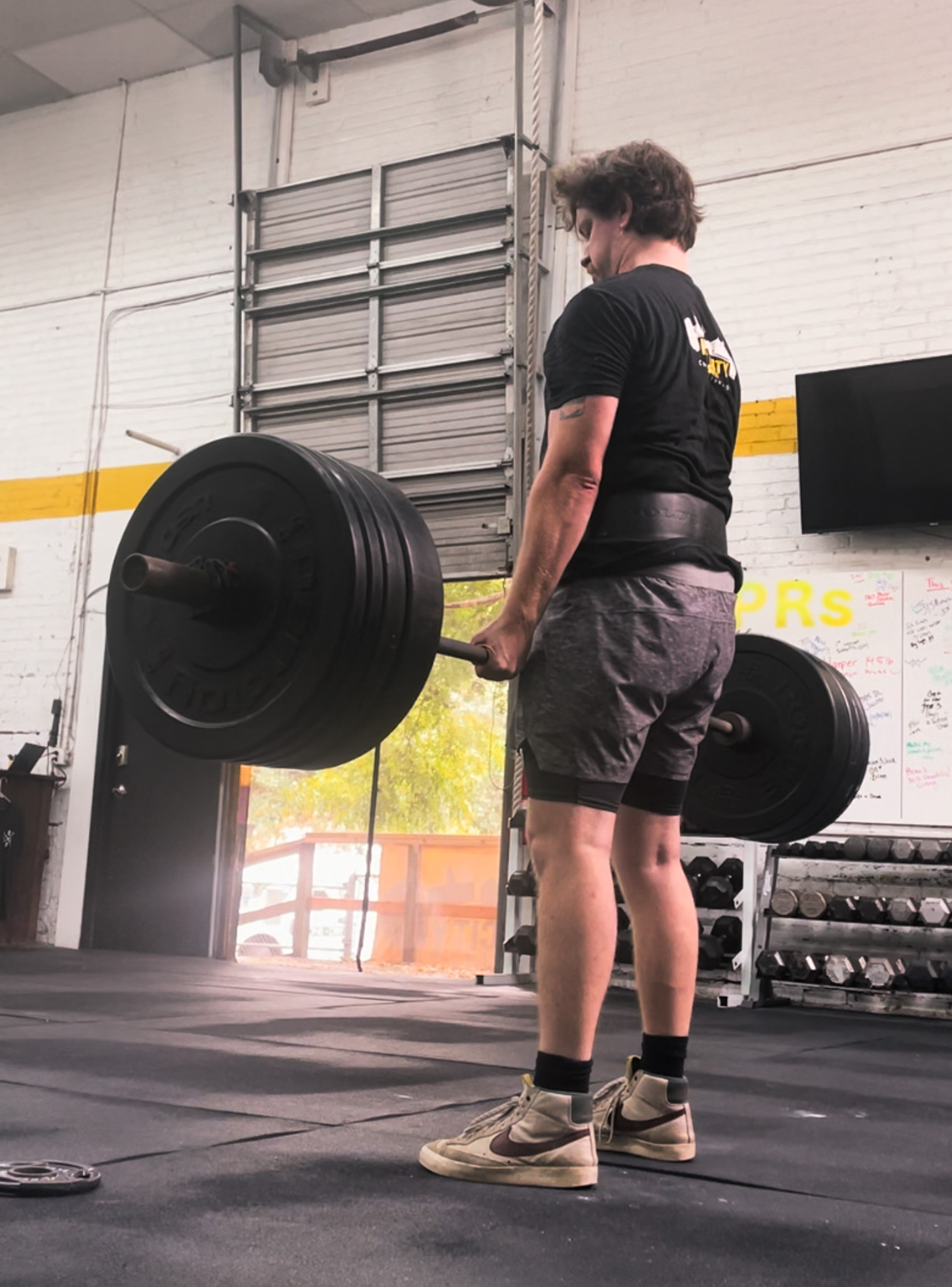
Once your mechanics degrade — your low back rounds on a deadlift, your knees start caving on a squat, your shoulders lose position on an overhead press — you're no longer training the intended movement. You're training a compensation pattern, usually one that reinforces exactly the weakness you're trying to fix. Add fatigue and load on top of a breakdown in mechanics, and you've built the conditions for an injury, not a PR.
The instinct to just push harder is understandable. Intensity is what gets results — that part is true. But intensity only works as an accelerant once the mechanics and consistency underneath it are solid. Skip that groundwork and intensity just accelerates the wrong thing.
This is also where a lot of well-meaning fitness advice quietly fails people. Generic programs and workout apps can hand you a number of reps and a weight recommendation. What they can't do is watch your ninth rep and tell you it looked different from your third.
How to Find Your Own Threshold — A Quick Self-Audit
You don't need a lab test to get a rough sense of where your threshold sits. You need to pay attention to a few honest signals, ideally over a few sessions rather than just one.
Start by asking yourself what actually happens in the last third of a hard set or a hard workout. Does your form hold, or does it quietly start to unravel — the bar path drifting, the depth getting shorter, the tempo getting sloppy? Most people can feel that they're tired. Fewer people can accurately tell how fatigue is changing their movement, because by definition you're least able to self-assess in the moment you're most fatigued.
It's also worth asking how you're picking your weights and paces in the first place. Are you choosing a number because you tested it and know where it puts you, or are you choosing it because it's what you used last time, or what looked reasonable on the whiteboard? A lot of people are training well below their threshold and plateauing from under-stimulation, while just as many are training well past it and quietly accumulating the kind of wear that shows up as an injury six months later — not during the workout that caused it.
One more honest question: after a hard session, are you recovering, or are you dragging for days? Threshold training done right leaves you legitimately tired, not broken. If you're consistently wiped out well past the next session, that's usually a sign the line got crossed somewhere, not that the work is "just paying off."
None of these questions have a universal right answer, because — again — the threshold itself is personal. What they're really testing is whether you have a clear, honest picture of where your line is. Most people don't, not because they lack self-awareness, but because it's genuinely hard to evaluate your own movement while you're the one under the bar and out of breath.
When It's Time to Bring In a Coach
This is the part of threshold training that's easy to miss: managing the threshold was never supposed to be the athlete's job. It's the coach's.
Left on your own, you'll almost always drift toward one of two extremes — either playing it too safe and stalling out, or chasing intensity past the point your mechanics can support, because in the moment, intensity feels like progress. Neither is a character flaw. It's just what happens when the person doing the lifting is also the only person watching the lifting.
A coach's actual job isn't to hand you a workout. Plenty of apps and templates can do that. A coach's job is to watch your specific movement, on your specific day, and tell you the thing you can't see about yourself in real time — that your knee just started caving, that your rep three looked cleaner than your rep nine, that today's version of "hard" needs to look different from last week's. That's the same principle we've talked about elsewhere: tracking your numbers is easy, but being held accountable to them by someone other than yourself is what actually makes the plan work. The exact same idea applies to your training, not just your nutrition.
If you've read through the questions above and you're not confident in your answers — if you genuinely don't know where your threshold sits, or you suspect you've been on one side of it for a while without meaning to be — that's usually the clearest sign that guidance from a coach, not another app or program, is the missing piece.
The Bottom Line
Your training threshold isn't a fixed number, and it isn't something you graduate past once you're "fit enough." It shifts based on sleep, stress, and life — for a beginner and a Games athlete alike, because, as CrossFit's own methodology has always maintained, the difference between the two was only ever a matter of degree.
Finding it on your own is possible. Finding it reliably, week after week, without a blind spot for your own fatigue, is a lot harder — which is exactly why coaching exists as its own discipline, not just a nicer way to hand someone a workout.
If you want a second set of eyes on where your threshold actually is instead of guessing at it, that's exactly what Core Coaching at Holy City CrossFit is built around: a coach watching your specific mechanics, your specific numbers, and your specific fatigue — not a generic template.